




0.80
True positive detection rate achieved on the test set using the proposed DQN-based lesion detection approach.
Research & Publications
MICCAI 2017
Gabriel Maicas, Gustavo Carneiro, Andrew P. Bradley, Jacinto C. Nascimento, Ian Reid
2017
Gabriel Maicas, Gustavo Carneiro, Andrew P. Bradley, Jacinto C. Nascimento, Ian Reid
2017

This MICCAI 2017 paper presents an automated breast lesion detection method for dynamic contrast-enhanced MRI using deep reinforcement learning. The method is designed to reduce inference time compared with exhaustive lesion search methods while retaining competitive detection accuracy.
The system trains an artificial agent using a deep Q-network to progressively focus attention on suspicious regions within a 3D breast MRI volume. The agent learns actions such as translation, scaling, and triggering the end of the search when a lesion is found.
Evaluated on 117 DCE-MRI patient volumes, the method achieves similar true-positive detection performance to state-of-the-art approaches while significantly reducing detection runtime.
“This work shows how reinforcement learning can make volumetric medical image search more efficient by teaching an agent where to look next instead of scanning every possible region.”
Editorial research summary
OrthoAI research content adaptation
True positive detection rate achieved on the test set using the proposed DQN-based lesion detection approach.
Mean inference time per patient, compared with 164 seconds for the multi-scale cascade and approximately 60 minutes for structured learning.
Dataset size used for evaluation, with 58 training patients and 59 testing patients.
The method frames lesion detection as a sequential decision-making problem. A deep Q-network receives an observation from the current bounding box and selects the next action to move, scale, or terminate the search.
The search process begins with broad bounding boxes and progressively narrows attention to likely lesion locations, reducing the need for exhaustive scanning.

The agent learns translation actions along the x, y, and z axes, scale actions to resize the search box, and a trigger action to indicate lesion detection.
Rewards are based on improvement in Dice overlap with lesion annotations, allowing the agent to learn efficient navigation through high-dimensional MRI volumes.
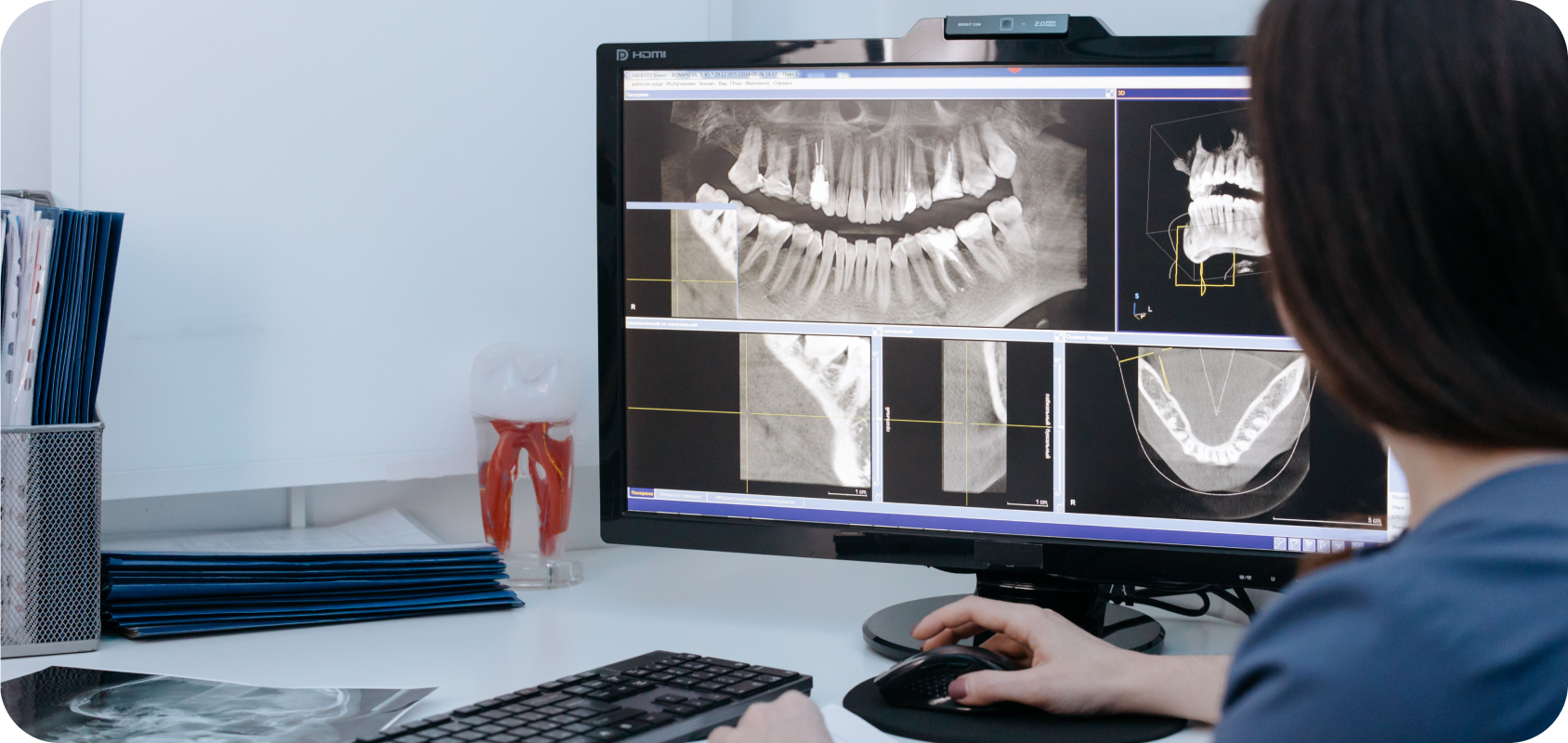
This paper introduces a reinforcement-learning-based approach for efficient breast lesion detection in high-dimensional DCE-MRI scans.

MICCAI 2018
Gabriel Maicas, Andrew P. Bradley, Jacinto C. Nascimento, Ian Reid, Gustavo Carneiro
CVPR 2021 · IEEE/CVF Conference on Computer Vision and Pattern Recognition
Jianpeng Zhang, Yutong Xie, Yong Xia, Chunhua Shen